
April 20–24, 2026 | UN Headquarters, New York
The 2026 ECOSOC Forum on Financing for Development Follow-Up officially opened at United Nations Headquarters on April 20, marking the first global review of progress since the adoption of the Sevilla Commitment in 2025. The Forum convened global leaders to address mounting economic challenges, with discussions focused on closing the widening Sustainable Development Goals (SDGs) financing gap.
The global economic landscape is stark: official development assistance fell 7.1 percent in 2024 and declined by a further 23.1 percent in 2025 — the steepest annual drop on record. Developing nations face an estimated $4.3 trillion annual SDG financing gap. Secretary-General Guterres warned that geopolitical divides, conflict, and declining investment are leaving developing countries starved of capital and drowning in debt.
The Forum featured in-depth reviews across four action areas: private business and finance, international trade, financial architecture reform, and data and monitoring, with special focus on debt sustainability and domestic resource mobilization.
Civil society organizations, operating through the NGO Committee on Financing for Development and the Civil Society FfD Mechanism, submitted collective inputs to the Forum’s outcome document and raised concerns that Global North pushback on UN debt reform risks undermining the Sevilla Commitment.
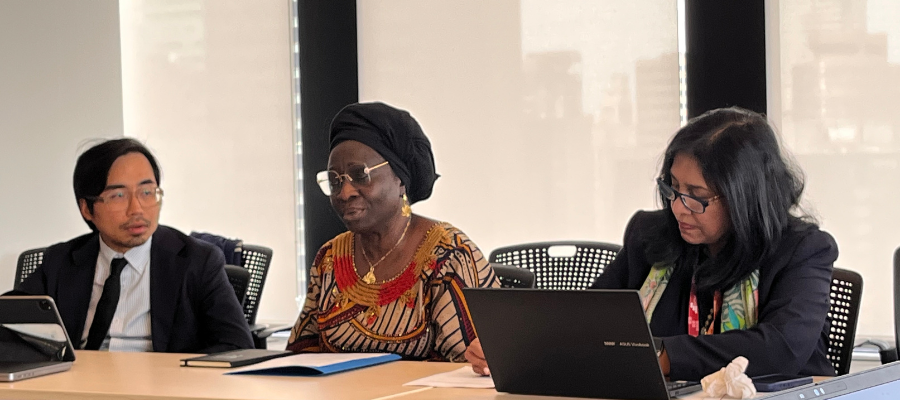
The IBVM-Loreto Generalate NGO to the UN, as a member of the NGO Committee on Financing for Development, supported three committee-led side events:
- Financial Inclusion and Agency Beyond Access: Digital Public Infrastructure, AI-Enabled Financial Systems, and Gender- and Age-Responsive Design (April 20)
- Financing People’s Health and Resilience in Conflict: Learning from the Frontline (April 22)
- Debt and Intergenerational Fiscal Responsibility: Ensuring Today’s Debt Decisions Do Not Burden Tomorrow’s Generations (April 23)
We remain committed to advocating for financial equity and inclusion, especially for marginalized populations, for debt relief and cancellation for highly indebted countries, and for effective climate financing.
Auteur: Sarah Rudolph, CJ


