
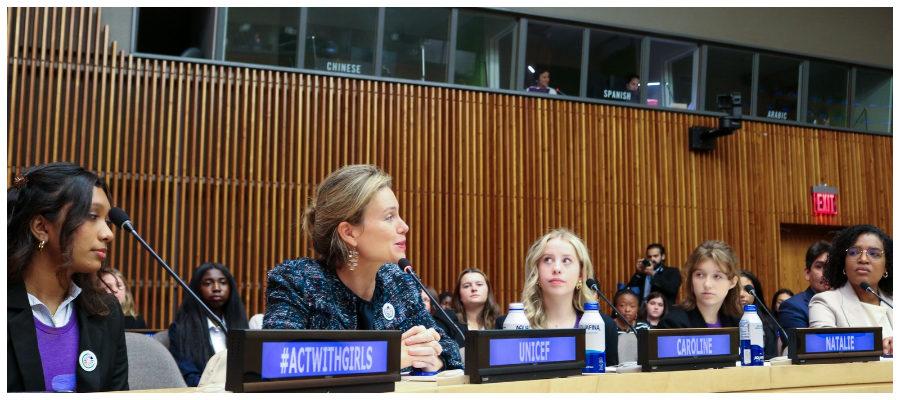
Report on Girls Speak Out 2026: Advancing Equality, Accelerating Action
On October 9, 2026, I had the opportunity to watch the United Nations celebration of the International Day of the Girl, titled Girls Speak Out: Advancing Equality, Accelerating Action: Building a World Where Girls Thrive. The event brought together girl advocates, representatives of Member States, and officials from United Nations agencies to discuss the challenges girls continue to face and the actions needed to create a more equal world.
As the global community approaches the 2030 deadline for the Sustainable Development Goals (SDGs), the event emphasized that progress towards gender equality remains insufficient. Although improvements have been made in girls education, healthcare, leadership, and protection, many girls continue to face child marriage, gender-based discrimination, poverty, violence, and exclusion from decision-making.
What made this event particularly meaningful to me was that girls were not presented merely as individuals who need protection or assistance. Instead, they were recognized as advocates, leaders, and active participants who have the knowledge and ability to shape their own futures. Watching the event was both inspiring and thought-provoking because it demonstrated the power of girls voices while reminding us how much work remains to achieve equality.
Girls Voices Must Lead the Change
One of the most memorable moments of the event was the decision to leave an empty chair on the stage. The chair represented every girl who is still denied the opportunity to participate, express her opinions, or have a voice in decisions that affect her life. The message behind this is simple but powerful gesture was that the work of achieving equality cannot be considered complete while some girls remain excluded.
This moment made me reflect on the meaning of representation. Sometimes, organizations and institutions may believe that they are making progress simply by including a few girls in discussions. However, meaningful representation requires more than inviting girls to participate. Their experiences, recommendations, and ideas must also be taken seriously and reflected in actual decisions.
This idea was reinforced by the words of girl advocates throughout the session. One speaker explained how, during her primary school years, she raised her hand to answer a teacher’s question but watched a boy who raised his hand later get called on first. Although it may have appeared to be a small incident, it made her question whether her voice counted as much as his. Her experience demonstrated how gender inequality can begin in everyday situations, shaping girls’ confidence and their understanding of their place in society.
Another important message was that girl’s participation should not be limited to preparing them to become leaders in the future. Girls are already leading today and their voices matter now. The discussion also highlighted that women continue to hold only about 27% of seats in national parliaments worldwide, demonstrating the need for greater representation in decision-making positions.
The event introduced the Working Group on Girls’ Girls Shadow Report, developed through girl-led conversation circles involving 297 girls across 13 countries. The report brought together their experiences, concerns, priorities, and recommendations using the Sustainable Development Goals as a framework. This was particularly significant because it demonstrated that progress should not be evaluated solely through the perspectives of governments and institutions. Girls themselves must be asked whether the changes being made are improving their lives.
Education, Leadership, and Collective Action
Education emerged as one of the most important foundations for gender equality. Speakers emphasized that every girl deserves access to inclusive, quality education, regardless of her circumstances. Education gives girls opportunities to develop their abilities, make informed decisions, participate in society, and pursue their ambitions.
The representative from Türkiye shared examples of initiatives supporting girls education and leadership. One initiative, Engineering Girls of Türkiye, has reportedly benefited more than 1,800 young women studying engineering since 2018 through scholarships, mentorship, and internships. This example demonstrated how targeted investment can help girls enter fields in which they may otherwise face barriers and limited opportunities.
The discussion also highlighted the importance of solidarity among girls and women. When girls support one another, they can build confidence, strengthen their collective voice, and encourage more people to participate in social change. Leadership, therefore, is not simply about being the first person to reach a position of authority. It is also about helping others access opportunities and ensuring that no one is left behind.
I found this message particularly inspiring because it presents leadership as a responsibility rather than merely an individual achievement. Achieving equality requires people to use their opportunities to support those who are still excluded. It is not enough for one girl to succeed if countless others continue to face barriers to education, safety, and participation.
Ending Child Marriage Requires More Than Laws
Child marriage was another major focus of the event. Speakers explained that although progress has been made over the years, the reduction in child marriage has not been sufficient. Ending this practice requires political commitment, effective legislation, community participation, and investment in girls’ futures.
Dr. Lauren Rumble, Associate Director for Gender Equality at UNICEF, emphasized the importance of working together to end child marriage. She highlighted three essential areas of action: strengthening political leadership and legislation, supporting girl leaders within communities, and investing in measures that have demonstrated positive results.
Examples from Sierra Leone and Nepal illustrated these approaches. In Sierra Leone, girls and advocates worked to change policies so that pregnant and parenting girls could return to school. Their efforts demonstrated how young people can challenge discriminatory systems and help secure meaningful policy changes.
The example from Nepal was especially meaningful to me. Dr. Rumble discussed Rupantaran, organization through which girls support one another in challenging child marriage. Girls engage with parents and community leaders, including in hard-to-reach areas, to prevent child marriages and encourage change in their communities. The initiative’s growing acceptance, including participation from boys and support from parents, demonstrated the importance of community involvement.
The discussion also highlighted Nepal’s reported reduction in child marriage by more than 10% over the previous decade and the government’s allocation of approximately 50 million from its budget to girls’ education. These examples illustrated how the efforts of girls can influence broader social and political action. However, continued investment is necessary, particularly in secondary education, where financial barriers may prevent girls from continuing their studies.
This part of the event reminded me that girls should not be expected to fight child marriage alone. Their efforts must be supported by families, communities, governments, and institutions. Laws are important, but lasting change also requires addressing poverty, social expectations, gender discrimination, and the conditions that allow child marriage to continue.
Menstrual Equity, Dignity, and Human Rights
Another important issue discussed during the session was menstrual inequality. The speakers emphasized that menstruation is not simply a matter of personal hygiene. It is also connected to healthcare, education, infrastructure, economic inequality, dignity, and human rights.
A girl advocate shared an experience from Nepal in which she encountered a young woman who had been isolated in a shed during menstruation because of the practice of chhaupadi. This practice is rooted in beliefs that menstruating women and girls are impure or unclean. The example demonstrated how cultural beliefs and discriminatory practices can directly affect girls health, safety, dignity, and participation in everyday life.
This discussion made it clear that providing menstrual products alone cannot completely address menstrual inequality. Girls also need safe sanitation facilities, access to healthcare, accurate information, and protection from harmful practices and discrimination.
Menstrual equity is essential because menstruation is a natural biological process, yet some girls continue to experience exclusion and humiliation because of it. No girl should have to sacrifice her safety, education, or dignity because of a natural part of her life.
Turning Commitments into Meaningful Action
Throughout the event, speakers repeatedly emphasized that progress must extend beyond promises, statistics, and policies written on paper. Governments and institutions must demonstrate that their commitments are producing real improvements in girls lives.
The representative from Mozambique stressed that girls participation should have meaningful consequences, with their ideas reflected in decisions, programmes, and policies. He also emphasized that education is fundamental and that girls must be treated as partners in shaping the policies that affect them.
Similarly, the discussion with the UN Women representative highlighted the importance of solidarity, particularly for girls who continue to be denied basic rights. The situation of girls in Afghanistan, where girls and women face severe restrictions on education and participation in public life, served as a reminder that progress is not experienced equally everywhere.
The event also raised concerns about the barriers girls face in different parts of the world, including poverty, violence, child marriage, and unequal access to opportunities. These challenges are interconnected and cannot be addressed through isolated interventions alone.
The questions raised by girl advocates encouraged participants to consider three essential issues: Who is being left behind? What barriers continue to prevent girls from progressing? And what can we do together to change the situation?
These questions are important because they shift the focus from celebrating progress alone to examining who is still excluded from it. True accountability requires identifying the gaps that remain and taking concrete action to address them.
Personal Reflection and Conclusion
Personally, watching this event was an inspiring yet heartbreaking experience. I felt encouraged by the confidence, knowledge, and determination of the girls who spoke about the issues affecting their lives. Their ability to communicate their experiences, question existing systems, and recommend changes demonstrated that young people have an important role to play in building a more equal society.
At the same time, I could not help reflecting on something that troubled me throughout the session. We celebrate the fact that more girls are attending school, receiving healthcare, and gaining access to opportunities. While these achievements deserve recognition, it is heartbreaking to realize that access to such basic necessities is still considered progress for so many girls. Education, healthcare, safety, and dignity are fundamental human needs and rights. They should not be privileges that girls must struggle to obtain or achievements that depend on where they are born.
The fact that some girls still have to fight for the opportunity to attend school, remain safe during menstruation, avoid child marriage, or have their opinions heard demonstrates how far we still have to go. Even when statistics show improvement, those numbers can hide the individual experiences of girls who continue to face discrimination and exclusion. Progress is important, but it should not make us overlook those who are still being left behind.
I was particularly moved by the examples from Nepal. Learning about girls organizing through Rupantaran to challenge child marriage, as well as the discussion about chhaupadi, made the event feel close to home. These are not distant issues that exist only in international discussions. They are realities connected to our own communities. At the same time, the examples showed that change is possible when girls are supported, communities become involved, and governments invest in meaningful solutions.
The message that leadership means helping others follow rather than simply reaching the top also stayed with me. I believe that equality cannot be achieved if it only benefits a small number of girls who are fortunate enough to receive education, recognition, or opportunities. Real progress must include girls from different backgrounds, including those affected by poverty, conflict, disability, discrimination, and social exclusion.
Overall, the first panel of Girls Speak Out 2026 strengthened my understanding that gender equality requires more than awareness and good intentions. It requires listening to girls, including them in decision-making, investing in their education and well-being, challenging discriminatory practices, and holding institutions accountable for their commitments. Most importantly, girls should not have to prove repeatedly that their voices matter or that they deserve basic rights.
The event left me with a powerful reminder: a world where girls thrive cannot be built by speaking about girls without listening to them. It must be built with them. As we work towards the 2030 Agenda, the goal should not simply be to celebrate how many girls have gained access to their rights, but to create a world in which every girl can exercise those rights without having to fight for them first.
Autor: Tejaswi Siwakoti, Youth Intern, Nepal


