
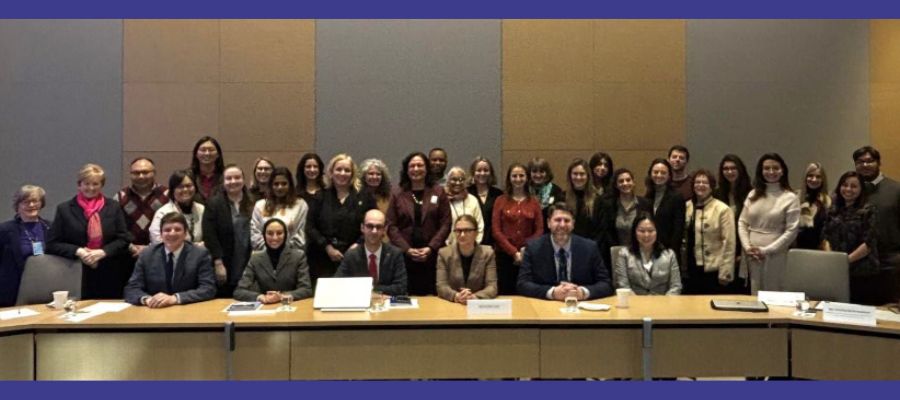
Highlights from the 2026 Breakfast with the Bureau
30 January 2026
Hosted by the NGO Committee for Social Development
Three months after the Second World Summit for Social Development in Doha, members of the CSocD Bureau, Member States, the UN, civil society and key partners gathered together to explore how to embed the Summit’s outcomes into the broader work of the CSocD and the United Nations. The dialogue emphasized the critical challenge of transforming commitments into actionable policies by creating an enabling environment that involves all stakeholders. Central to these efforts is the imperative to reduce inequalities, while centering human rights and peace as guiding principles.
With over 100 Member States expected to participate in CSocD64, including 30 at the ministerial or vice-ministerial level, and 600 registered civil society representatives, the scale of anticipated engagement demonstrates widespread commitment. However, as inequalities continue to widen globally, greater political will and leadership remain essential. Both governments and civil society must collaborate to build progress from the ground up, establishing a clear link between the Doha Declaration and the Commission’s work to transform global commitments into concrete realities.
Effective social development requires integrating economic, social, environmental, and digital considerations across three core areas: strengthening social protection systems, expanding employment opportunities, and investing in care and support systems. People must remain at the center of development initiatives. Civil society has a significant role to play in ensuring grassroots realities are reflected in policies by shaping and designing them from the beginning and connecting them to the work at the global multilateral level. This necessitates ensuring that civil society has meaningful opportunities to engage, recognizing that global commitments must be grounded in local realities.
The dialogue highlighted that building on both the Copenhagen Declaration and the Doha Political Declaration requires collective action. Success depends on multi-stakeholder efforts to achieve commitments from both World Social Summits and ensure that no one is left behind. The advocacy priorities presented interconnect with the three pillars of social development: poverty eradication, promoting decent work, and advancing social inclusion. Sustained dialogue and collaboration between Member States and civil society throughout the year—not only during Commission sessions—is essential to achieving these objectives.
Participants emphasized several critical insights during open discussion. Civil society serves as the conscience of social change, maintaining momentum while Member States navigate the complex realities of governance. Increased constructive engagement between these actors is essential for advancing social development, as civil society organizations bring invaluable grassroots experience from around the globe that is crucial to effecting enduring social transformation. Their work provides the urgency for change, as they witness daily the situations of people affected by social challenges.
Despite the promises of progress, millions worldwide remain marginalized by social discrimination from birth. Addressing this reality requires not only government and civil society action but also active participation from the private sector to mobilize resources for social change initiatives. The underlying message emerging from this dialogue is clear: coherence across all stakeholders is fundamental to moving forward together in advancing social development and social justice through coordinated, equitable, and inclusive policies.
Autor: NGO-Ausschuss für soziale Entwicklung


